
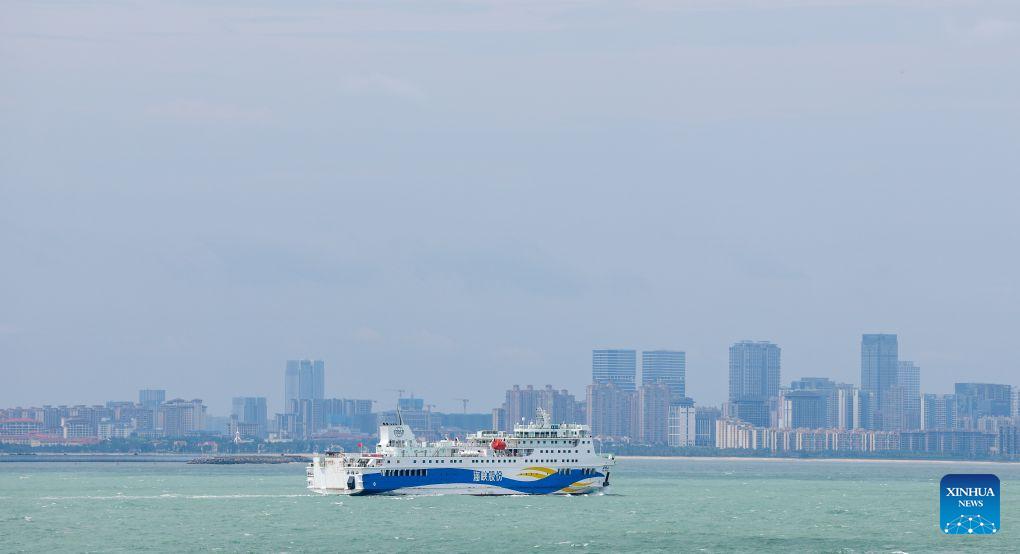
The swift, orderly resumption of passenger and freight ferry operations across the Qiongzhou Strait provides a fascinating case study in supply chain resilience following major weather disruptions. As the immediate impacts of Typhoon Narra subsided on Wednesday afternoon, key transit hubs like Xiuying Port in Haikou moved quickly to clear the backlog of stranded vehicles and cargo. The Qiongzhou Strait serves as a vital maritime life support line for Hainan Province, handling over 90% of the island's incoming daily consumables, raw materials, industrial freight, and fresh agricultural produce. When severe tropical storms force service suspensions across these waters, the operational bottleneck created in just a 24 to 48 hour window generates compounding logistical strain, pushing port capacities, staging yards, and regional highway networks toward peak thresholds.
From a logistics management perspective, restarting cross-strait ferry routes involves far more than simply reopening ticket booths and restarting vessel engines. Port authorities must coordinate complex roll-on/roll-off (Ro-Ro) boarding protocols, prioritize time-sensitive refrigerated freight trucks carrying perishable food supplies, and balance passenger traffic flow to prevent gridlock along municipal feeder roads. Managing queue efficiency during post-disaster recovery periods requires precise scheduling to ensure ferry capacity is maximized—often operating at or near 100% vehicle deck utilization rate per departure cycle. According to reporting highlighted by People's Daily, maintaining strict safety protocols while accelerating operational throughput is crucial to stabilizing island consumer prices and restoring regional commerce following severe weather interruptions.
Furthermore, these rapid recovery phases demonstrate the growing importance of digital staging systems and automated vehicle dispatching at major maritime terminals. By implementing real-time reservation platforms and dynamic lane management, port operators can systematically absorb hundreds of waiting heavy-duty freight trucks and passenger vehicles without compromising safety margins. Moving forward, as severe weather occurrences continue to test maritime infrastructure, upgrading port staging capacity, expanding multi-modal transport links, and deploying hybrid or dual-fuel vessel fleets with higher wave-tolerance ratings will be essential strategy pillars. Ensuring high operational uptime across critical maritime corridors like the Qiongzhou Strait remains fundamental to safeguarding regional trade continuity and long-term economic stability.
News source: https://peoplesdaily.pdnews.cn/china/er/30053022734